Dozens of Iranian Companies Building Satellites and Space Equipment
Iran's space agency reports several dozen firms active in satellite manufacturing, with three new constellation satellites set for unveiling this year.
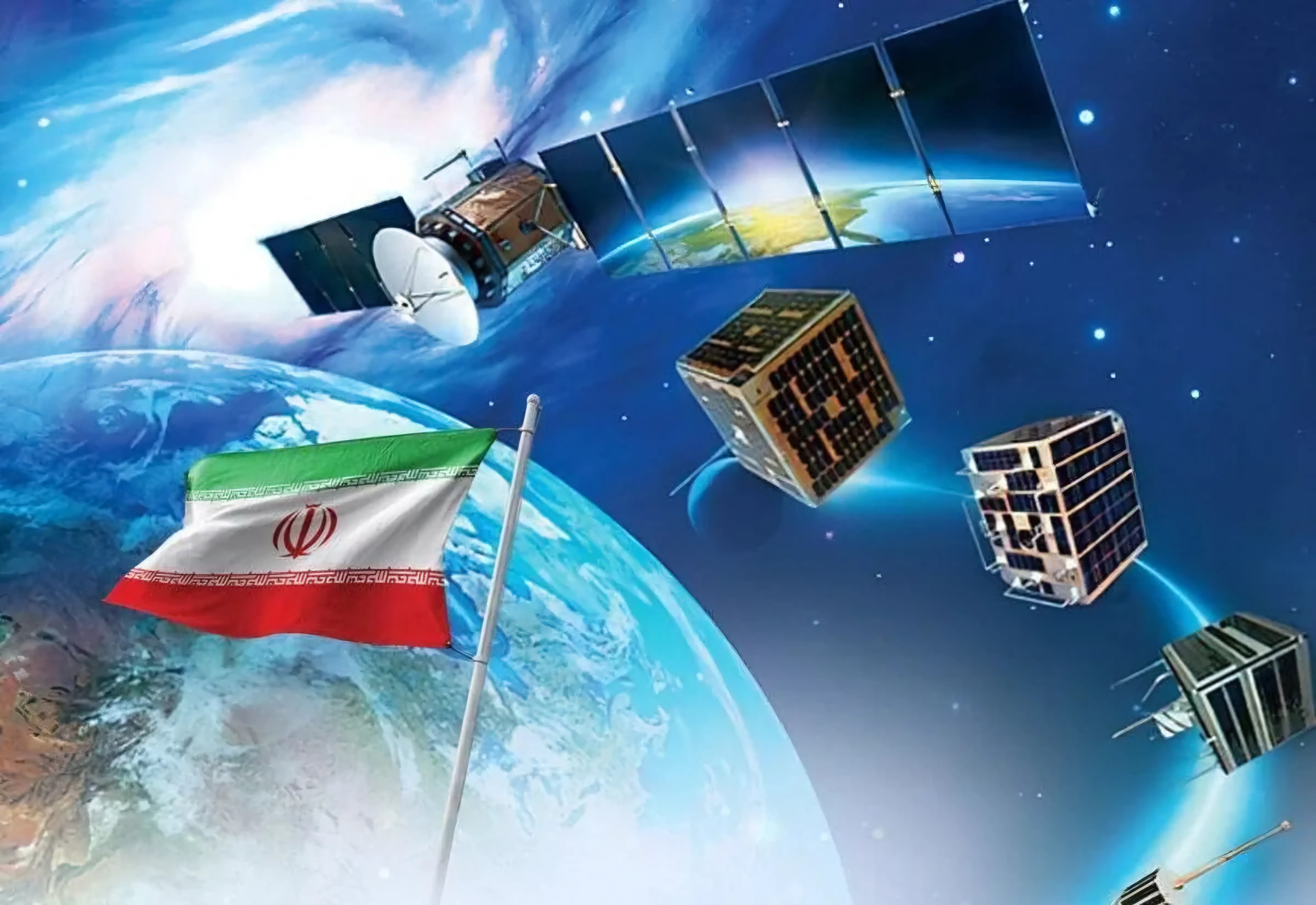
Iran's burgeoning space industry now counts several dozen companies actively engaged in satellite and space equipment manufacturing, according to Hassan Salarieh, head of the Iranian Space Agency.
Speaking on the sidelines of World Space Week celebrations, Salarieh told reporters that whilst fewer firms possess the capability to build complete satellites, a larger number contribute to manufacturing satellite subsystems and components.
Pars 2 Satellite Nears Launch
The Pars 2 satellite, unveiled in 2024, has completed final testing and is now awaiting launch, Salarieh confirmed. "As soon as compatibility tests between the satellite and launch vehicle are completed, the launch process will proceed," he said.
The agency chief indicated that Pars 2 will most likely be launched using a foreign launch vehicle, with negotiations ongoing both with previous partners and new providers. No precise launch date can be announced until compatibility testing concludes and the launch provider is finalised.
Shahid Soleimani Constellation Advances
The Shahid Soleimani constellation comprises 24 satellites—18 primary units and six reserves—currently under construction. Three additional satellites from this constellation are scheduled for unveiling this year, with launch preparations underway.
"Our forecast is that the unveiling will definitely take place this year," Salarieh emphasised, though he cautioned that launch timing may shift slightly depending on technical assessments and compatibility testing.
Thriving Private Sector
In the downstream sector—services based on satellite data and imagery—several hundred companies are active in remote sensing and related fields, demonstrating the breadth of Iran's commercial space ecosystem.
Universities play a crucial role in developing emerging technologies, including camera systems and other innovations not yet commercialised by knowledge-based enterprises. The space agency has defined multiple collaborative projects with universities, supported by the Ministry of Science, the Vice Presidency for Science and Technology, and the Ministry of Communications.
Advanced Bio-capsule in Development
A new, more sophisticated bio-capsule is under design and construction at the Aerospace Research Institute, Salarieh revealed. This capsule features guidance, control and navigation capabilities and is designed with higher mass capacity to provide suitable living conditions for larger organisms.
"Our forecast is that this capsule's programme will reach next year—1406," he said, referring to the Persian calendar year beginning in March 2027.
Launch Vehicles and Radar Satellite
Iran continues to develop both liquid- and solid-fuel launch vehicles. The Simorgh family is being upgraded, with the next-generation Ghaem launcher capable of carrying up to one tonne into low Earth orbit.
In solid-fuel systems, the Ghaem 100 has achieved technological validation, whilst Ghaem 105 and 120 are under development. Sub-orbital tests of the Ghaem 105 are expected to begin soon.
Salarieh also confirmed that Iran's first domestically built radar satellite remains in design and construction, with an unveiling targeted for this year or next.
The three satellites launched to space using a Russian launcher last year are performing well: the Payam satellite is fully operational, whilst two others are completing their testing phases.
Risk Mitigation and Infrastructure Protection
To reduce operational risks, the space agency is working closely with Iranian insurers. Most satellites now being launched and those already operational are covered by insurance.
In collaboration with the Ministry of Communications, the Vice Presidency for Science and Technology, and the Planning and Budget Organisation, the agency is establishing or allocating dedicated funds to support the space industry.
Following recent conflict-related damage to research and development facilities, new locations for space infrastructure are being selected with enhanced protective considerations. "We use the term 're-creation' rather than reconstruction," Salarieh explained, "because the issue is not merely building a structure. Design and construction must be done in a way that minimises the vulnerability of infrastructure as much as possible."
More stories
Iran's Tech Diaspora Powers Domestic Startup Boom
Iranian expatriates are quietly fuelling a tech revolution at home, bridging sanctions and borders to mentor startups and transfer knowledge across a thriving digital economy.
5 October 20262 min read
Iran's Startup Ecosystem: Nine Success Stories Transforming Daily Life
From payment gateways to ride-hailing and digital health, Iranian startups have built thriving platforms that serve millions and reshape how people live and work.
5 October 202610 min read